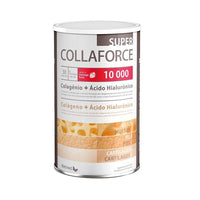


Did you know that collagen is the most abundant protein in the human body? It's true! Collagen is a protein that plays a fundamental role in our health, especially in the health of our skin. However, as we age, natural collagen production is affected, directly impacting skin firmness and elasticity. This decrease results in natural skin aging.
But we have good news! Science has revealed effective ways to combat this natural loss of collagen through supplementation with this protein, an approach that has gained increasing attention, both in the scientific community and among health and beauty professionals.
In this article, we'll explore the science-backed benefits of collagen for skin health , revealing how this protein can be a powerful ally in maintaining youthful, healthy skin.
It's important to mention that the benefits of collagen go far beyond skin health: in fact, the benefits extend to the health of our nails, hair, tendons, among others!
What is Collagen and What is Its Function in the Skin?
Collagen is the main protein in our body, which, as we saw earlier, is especially important in tissues such as skin, tendons, cartilage, and bones. To give you an idea of its importance, it represents between 25% and 30% of all proteins in our body. 2
In the specific case of skin, collagen is even more important: it represents up to 75% of its total weight. 3 Imagine collagen as an essential support network that, together with other natural substances in our body, forms a kind of "scaffolding" or scaffold that keeps our skin firm and healthy. This network supports several important skin cells: fibroblasts (which produce more collagen), keratinocytes (which form the skin's protective layer), melanocytes (responsible for our skin color), and the immune system cells that protect our skin. 3
4 Proven Benefits of Collagen for Skin
1. Reduction of wrinkles and expression lines
To prove the benefits of collagen on the skin, researchers conducted a study using standardized photographs 3 , taken from the front and profile, to specifically evaluate wrinkles at the corners of the eyes – commonly known as "crow's feet."
The results were surprising: in the group that supplemented with collagen peptides, wrinkles began to visibly smooth out after just 28 days of supplementation. After 84 days (about 3 months), both study groups showed improvement—but the collagen group saw results much more quickly.
The study wasn't limited to just wrinkle depth. Researchers also measured the length, area, and volume of wrinkles at the corners of the eyes, and after 84 days, all of these measures improved significantly in both groups.
In simple terms, this means that collagen supplementation not only helps reduce wrinkles5, but also starts showing results faster.
2. Increased Skin Hydration
Another study looked at how collagen affects skin hydration. 4 The study divided participants into three groups, but it was the group that supplemented with collagen (especially the one that combined collagen with hyaluronic acid) that saw the most significant results in skin hydration. 4 It was almost as if the skin had become a more efficient sponge at retaining water!
Although the differences between the groups were not statistically significant (meaning we need more studies to confirm these results), the positive trend suggests that collagen may play an important role in skin hydration4.
3. Improves Skin Elasticity
The same study4 sought to evaluate the impact of collagen on skin elasticity—the skin's ability to return to its original shape after being stretched. After all, elastic skin is younger and healthier skin.
The study again divided people into three groups and the results were remarkable:
• The group that took collagen showed a 17.4% improvement in skin elasticity;
• The group that took collagen with hyaluronic acid had an improvement of 14.3%;
• The placebo group had much smaller improvements.
Interestingly, the improvements were much more obvious after 16 weeks than after 8 weeks, suggesting that patience and consistency are important when taking collagen supplements.
4. Skin beauty
Researchers also wanted to understand how people themselves rated the beauty of their skin during the study 3 . To do this, they asked participants to rate the appearance of their skin (although “beauty” is an abstract concept) at different points in the study 3 .
• People who took collagen noticed improvements in the beauty of their skin after just 28 days, with a 15% increase in satisfaction with the appearance of their skin;
• The group that did not take collagen (but placebo) only began to notice improvements in the beauty of their skin after 84 days.
This is particularly interesting because it matches the scientific evidence we mentioned earlier - collagen not only improves measurable aspects of the skin (like hydration and elasticity), but it also makes people feel more satisfied with the appearance of their skin much faster!
How to Maximize the Benefits of Collagen for Skin?
For the best results for your skin health, consider:
• Maintain regular supplementation – if in doubt, consult a health professional;
• Protect your skin from the sun with appropriate sunscreen, even on sunny days;
• Maintain good hydration, drinking at least 2 liters of water per day;
• Maintain a balanced diet.
Evidence suggests that collagen is a powerful ally in maintaining skin health and beauty, with scientifically proven benefits. Regular supplementation, combined with good skincare habits, can provide significant results in skin appearance and health.
Did you enjoy discovering how collagen can improve your skin health? Share this article with your friends on social media and help them discover the benefits of this essential protein. Don't forget to follow our blog for more health and wellness tips and information!
Referências
Aviso legal
This article is not intended to diagnose, treat, or replace medical advice. Its content is for informational purposes only. Consult a doctor or healthcare professional regarding any medical diagnosis or treatment options related to your health. The claims made about specific products in this article are not approved to diagnose, treat, cure, or prevent disease.