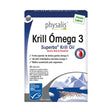












Physalis Krill Omega 3 30 capsules
Uses
- Bones and joints
- Cardiovascular diseases
- Blood pressure
- Arteriosclerosis
- Cholesterol and triglycerides
- Memory and cognitive faculties
- Attention deficit/hyperactivity disorder
-
Description
Krill, the collective name for small cold-water shrimp, is a species of marine zooplankton. Physalis krill oil is extracted from Euphausia superba. Krill oil is very rich in omega-3 fatty acids EPA and DHA. The omega-3s in krill oil are present in the form of phospholipids, which are very well assimilated by the body. In addition to these fatty acids, krill oil contains astaxanthin. It is harvested ecologically, exclusively in regulated areas. It is immediately extracted on board, which prevents any enzymatic degradation or oxidation. All batches of krill oil are fully monitored.
Dietary supplement -
Warnings
Allergen information: May contain traces of crustaceans and fish. Dietary supplements should not be used as a substitute for a varied and balanced diet and a healthy lifestyle. Keep out of the reach and sight of children. Do not exceed recommended doses. Store in a cool, dry place, away from light, heat, and moisture. Do not use in cases of hypersensitivity, allergy, or when interactions of another product with any of the ingredients in the formulation are described.
-
Presentation
30 Capsules -
How to Use
Take 1 to 2 capsules a day, during meals with a little water -
Nutritional Composition
Composition per 2 capsules:
Krill oil 1000 mg; Marine phospholipids 400-460 mg; Phospholipids in which at least one of the two fatty acids present is an omega-3 fatty acid >70%; Omega-3 fatty acids 220-260 mg; EPA 120-160 mg; DHA 55-75 mg; Astaxanthin =150 µg; Choline =50 µg. -
Type
Capsules -
Ingredients
Ingredients: MSC-certified lipid extract from Antarctic krill crustacean (Euphausia superba), fish gelatin, gelling agent: glycerol. -
Disclaimer
Bioself Natura Lda is not responsible for any discrepancies and/or modifications related to the product information on the website, provided by the supplier/manufacturer, which appears on the product labels. We therefore recommend that you always read the mandatory and/or voluntary information on the product labels before using or consuming the products.
You may also like
-
 -25%
-
 -25%
-
 -25%
-
 -25%
-
 -25%
-
 -35%
-
 -30%
-
 -35%
-
 -35%
-
 -35%
-
 -35%
-
 -35%